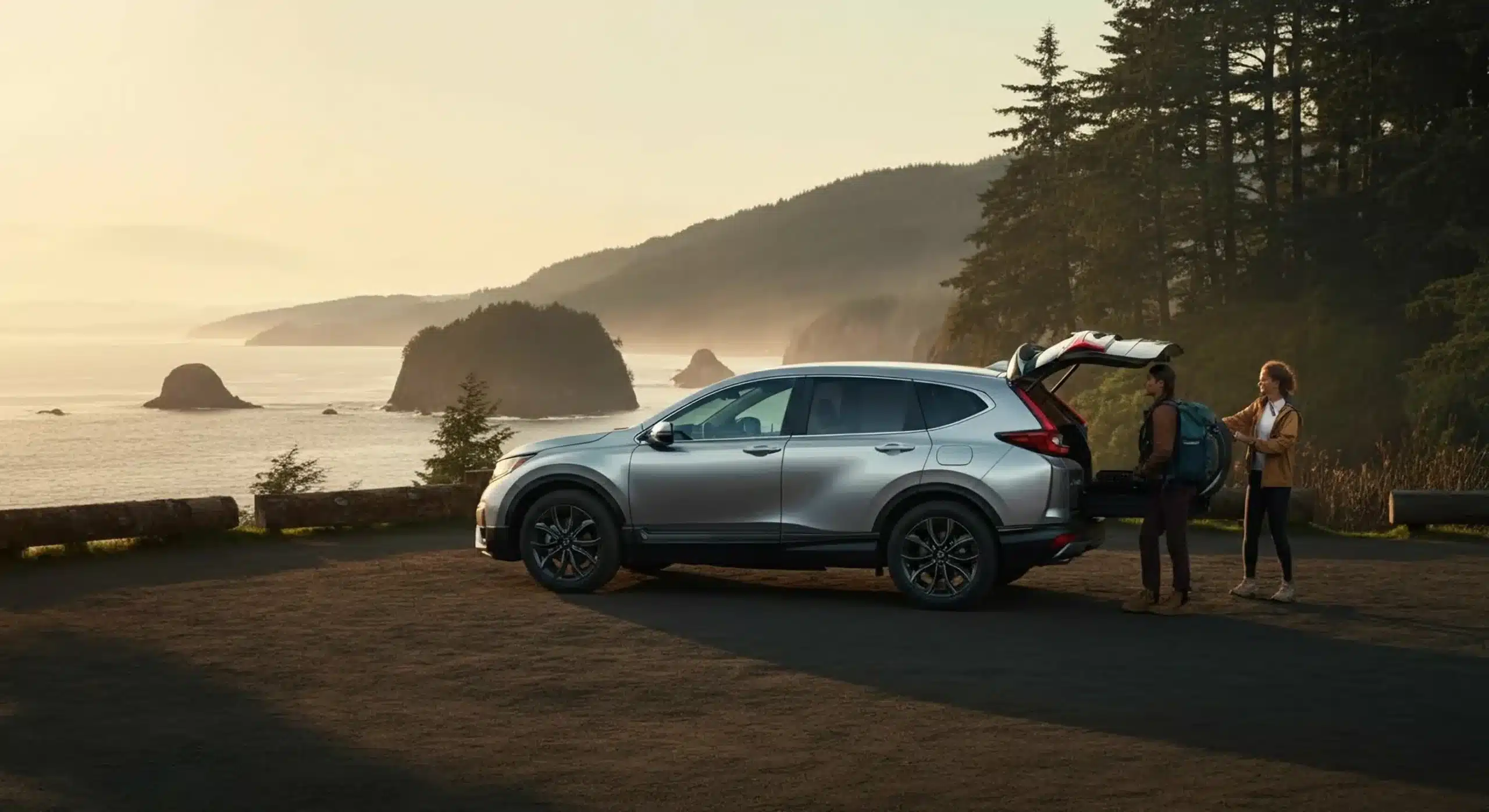
The Honda AWD Lineup and How It Handles Canadian Roads
If you’re searching for the best AWD cars in Canada, Honda’s 2026 lineup covers a lot of ground. Rain-slicked highways, sudden snow squalls, and gravel-to-pavement transitions can turn a routine commute into a genuinely stressful experience. For Vancouver drivers, that’s not hypothetical, heavy rain downtown, icy stretches on the Sea-to-Sky, and slushy North Shore mountain […]
If you’re searching for the best AWD cars in Canada, Honda’s 2026 lineup covers a lot of ground. Rain-slicked highways, sudden snow squalls, and gravel-to-pavement transitions can turn a routine commute into a genuinely stressful experience. For Vancouver drivers, that’s not hypothetical, heavy rain downtown, icy stretches on the Sea-to-Sky, and slushy North Shore mountain roads make AWD a practical choice, not just a marketing checkbox. As of 2026, Honda offers AWD across subcompact crossovers, midsize SUVs, pickups, and a fully electric option.
Why AWD Matters for Canadian Drivers
All-wheel drive sends power to all four wheels, which helps maintain traction when road surfaces change without warning. In a country where you can hit dry pavement, black ice, and wet gravel in a single commute, that matters.
For Vancouver and the Lower Mainland, the benefit is specific. Highway 99 toward Whistler requires winter tires during colder months, and conditions shift from rain at sea level to packed snow near the summit. Routes through the Coquihalla to the BC Interior can change dramatically in minutes. AWD paired with proper winter tires gives drivers a real safety margin on these roads.
Not all AWD systems work the same way, though. Some run full-time and consume extra fuel. Others activate only when needed, keeping fuel economy closer to a front-wheel-drive vehicle under normal conditions. Honda takes the second approach, and for how most Canadians actually drive, it works well.
How Honda AWD Systems Work
Honda uses two distinct AWD systems across its 2026 lineup. Knowing the difference helps you choose the right vehicle.
Real Time AWD With Intelligent Control System
Found on the CR-V, CR-V Hybrid, and HR-V, this system monitors conditions continuously. On dry roads, it directs power primarily to the front wheels to save fuel. The moment it detects wheel slip, rain, snow, loose gravel, it sends torque to the rear wheels automatically.
The CR-V includes a dedicated Snow drive mode that adjusts throttle response and AWD behaviour for slippery conditions. The result is confident handling without the fuel penalty of a permanent AWD system.
i-VTM4 Torque-Vectoring AWD
The Pilot, Passport, and Ridgeline use Honda’s i-VTM4 system. This more advanced setup directs torque to individual rear wheels during cornering or low-traction situations, keeping the vehicle planted and predictable on uneven terrain.
The Pilot offers drive modes including Normal, Snow, Sport, Tow, and Trail, each one recalibrating the AWD system, throttle, and transmission for the situation. For families heading to Cypress Mountain or hauling a trailer to the Okanagan, i-VTM4 delivers real capability.
Honda’s AWD Lineup for the 2026 Model Year
HR-V, The City-Friendly AWD Crossover
The HR-V pairs a 2.0-litre VTEC engine with available Real Time AWD. Combined fuel economy with AWD sits at 8.7 L/100 km, reasonable for a vehicle offering up to 1,559 litres of cargo space with the rear seats folded. Honda Sensing comes standard. For drivers in Burnaby or Richmond who want AWD confidence without a large footprint, the HR-V fits well. You can find a closer look at how it handles Metro Vancouver conditions in our HR-V Sport and EX-L trims overview for Vancouver weather and tight streets.
CR-V and CR-V Hybrid, Strong Picks Among the Best AWD Cars for Canadian Families
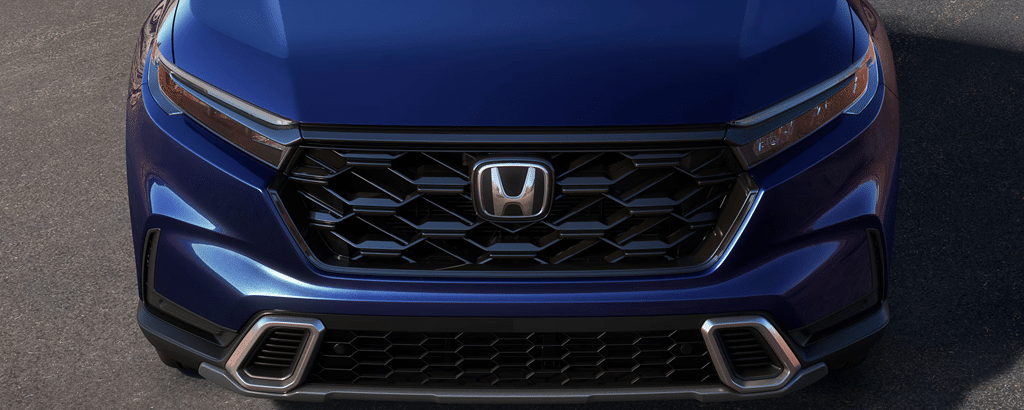
The CR-V remains one of Honda’s most popular models in Canada. The gas model produces up to 190 hp from its 1.5-litre turbo engine. The Hybrid delivers up to 204 hp and up to 247 lb-ft of torque from its 2.0-litre Atkinson-cycle engine paired with two electric motors. Real Time AWD is standard on Hybrid models.
The CR-V Hybrid achieves combined fuel economy as low as 6.4 L/100 km with AWD. That’s a strong number for a compact SUV tackling Vancouver’s hills and highway stretches. The TrailSport Hybrid trim adds all-terrain tires for drivers who venture beyond paved roads regularly. Full specifications are available on the official Honda Canada CR-V page.
Pilot, The Three-Row Family Hauler With AWD
For families needing three rows, the 2026 Pilot seats up to eight and comes standard with i-VTM4 AWD on every trim. Its 3.5-litre V6 is paired with a 10-speed automatic transmission. The TrailSport trim adds Trail and Sand drive modes for weekend adventures. See how it performs beyond the pavement in our look at how the 2026 Honda Pilot TrailSport handles off-road trails.
Passport, The Adventure-Ready Five-Seater AWD Honda
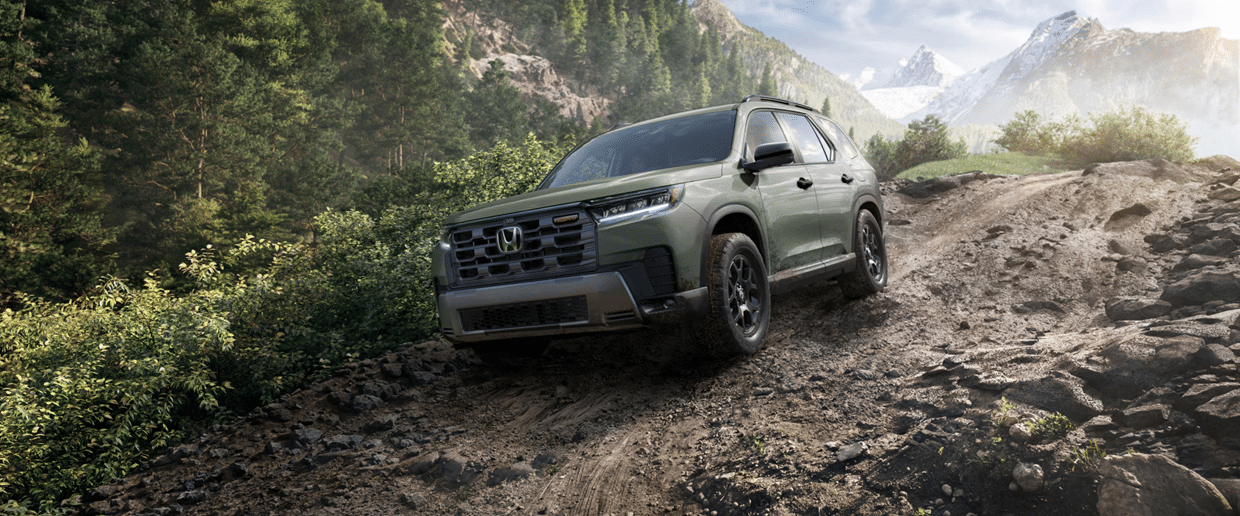
The Passport shares the Pilot’s 3.5-litre V6 and i-VTM4 AWD system but drops the third row for a more rugged, five-passenger layout. Drive modes span Sport, Normal, ECON, Snow, Trail, Sand, and Tow. For drivers who prioritize backcountry access over passenger count, the Passport is a strong choice. Read more in our detailed look inside the 2026 Honda Passport and its TrailSport trim.
Ridgeline, AWD Pickup With a Twist
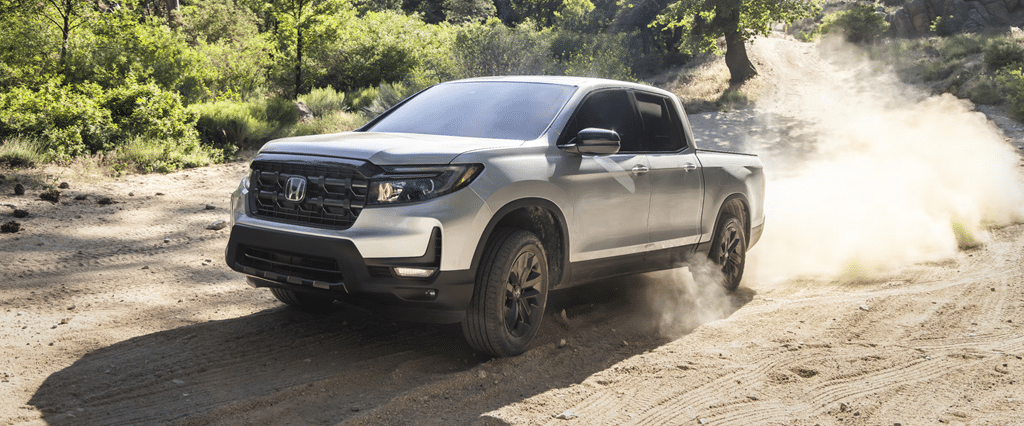
Honda’s midsize pickup comes standard with i-VTM4 AWD and a fully independent suspension, front and rear. That independent rear setup sets it apart from most trucks, delivering a smoother ride on pavement while still handling trails and job sites. The lockable In-Bed Trunk adds hidden, weatherproof storage that most pickups simply don’t offer.
Prologue, The All-Electric AWD Option for BC Drivers
BC leads Canada in EV adoption, and the 2026 Honda Prologue brings all-electric AWD to the lineup. Its dual-motor system delivers strong performance and DC fast charging capability, with access to Tesla Superchargers through Honda’s NACS-CCS adapter for longer trips. For Vancouver drivers ready to go electric without giving up AWD, the Prologue is part of the full Honda inventory at Carter Honda.
AWD vs. FWD for Vancouver Driving
Here’s an honest take. Vancouver’s city winters are mild and wet, so a front-wheel-drive car with quality winter tires handles daily commuting just fine. Where AWD earns its keep is on mountain highways, ski hill access roads, and trips through the BC Interior.
For the 2026 model year, if your regular routine includes the Sea-to-Sky, the North Shore mountains, or weekend runs through the Coquihalla, AWD provides a real confidence boost. And because Honda’s Real Time AWD activates only when traction drops, you get that extra grip without sacrificing much fuel efficiency during everyday city driving. That balance suits Metro Vancouver’s mix of rain-soaked urban streets and snowy mountain passes well.
For a broader look at how Honda’s SUV models compare, see our overview of the Honda SUV lineup and how all the models compare.
Find Your AWD Honda in Vancouver
Carter Honda on Burrard Street has served Vancouver, Burnaby, Richmond, and North Vancouver since 1974. The team specializes in Honda hybrids and the Prologue electric SUV, and staff assist customers in English, Mandarin, Cantonese, Farsi, Spanish, French, and Portuguese. Browse AWD models in the current new vehicle inventory or book a service appointment for your existing Honda.
For detailed specifications on any 2026 Honda model, visit honda.ca.
Frequently Asked Questions
Which 2026 Honda models come with AWD in Canada?
The CR-V, CR-V Hybrid, HR-V, Pilot, Passport, Ridgeline, and Prologue all offer AWD for the Canadian market. On the Pilot, Passport, and Ridgeline, AWD is standard on every trim. On the CR-V Hybrid, Real Time AWD is also standard. The HR-V and gas CR-V offer AWD as an available option. Contact Carter Honda in Vancouver for trim-specific details on any model you’re considering.
Is AWD necessary for driving in Vancouver?
For daily city driving in Vancouver’s mild, rainy winters, front-wheel drive with winter tires handles most conditions well. That said, AWD adds a meaningful safety margin if you regularly drive to Whistler, Cypress Mountain, or through mountain passes to the BC Interior. Honda’s Real Time AWD activates only when traction drops, so it adds confidence without a significant fuel economy penalty during normal commuting.
How does Honda Real Time AWD differ from i-VTM4?
Real Time AWD, found on the CR-V and HR-V, sends torque rearward when it detects wheel slip, then returns to primarily front-wheel drive on dry roads. i-VTM4, used on the Pilot, Passport, and Ridgeline, is a torque-vectoring system that directs power to individual rear wheels during turns or on uneven terrain. Both systems suit Canadian road conditions well, but i-VTM4 offers more advanced capability for towing and off-road driving.
What fuel economy can I expect from a Honda AWD vehicle?
Fuel economy varies by model and powertrain. The CR-V Hybrid with Real Time AWD achieves as low as 6.4 L/100 km combined, while the HR-V AWD comes in at 8.7 L/100 km. For drivers who want the most fuel-efficient option among the best AWD cars in Canada’s Honda lineup, the CR-V Hybrid stands out clearly. Current figures for all 2026 models are listed on honda.ca.
Disclaimer: Content contained in this post is for informational purposes only and may include features and options from US or international models. Please contact the dealership for more information or to confirm vehicle, feature availability.