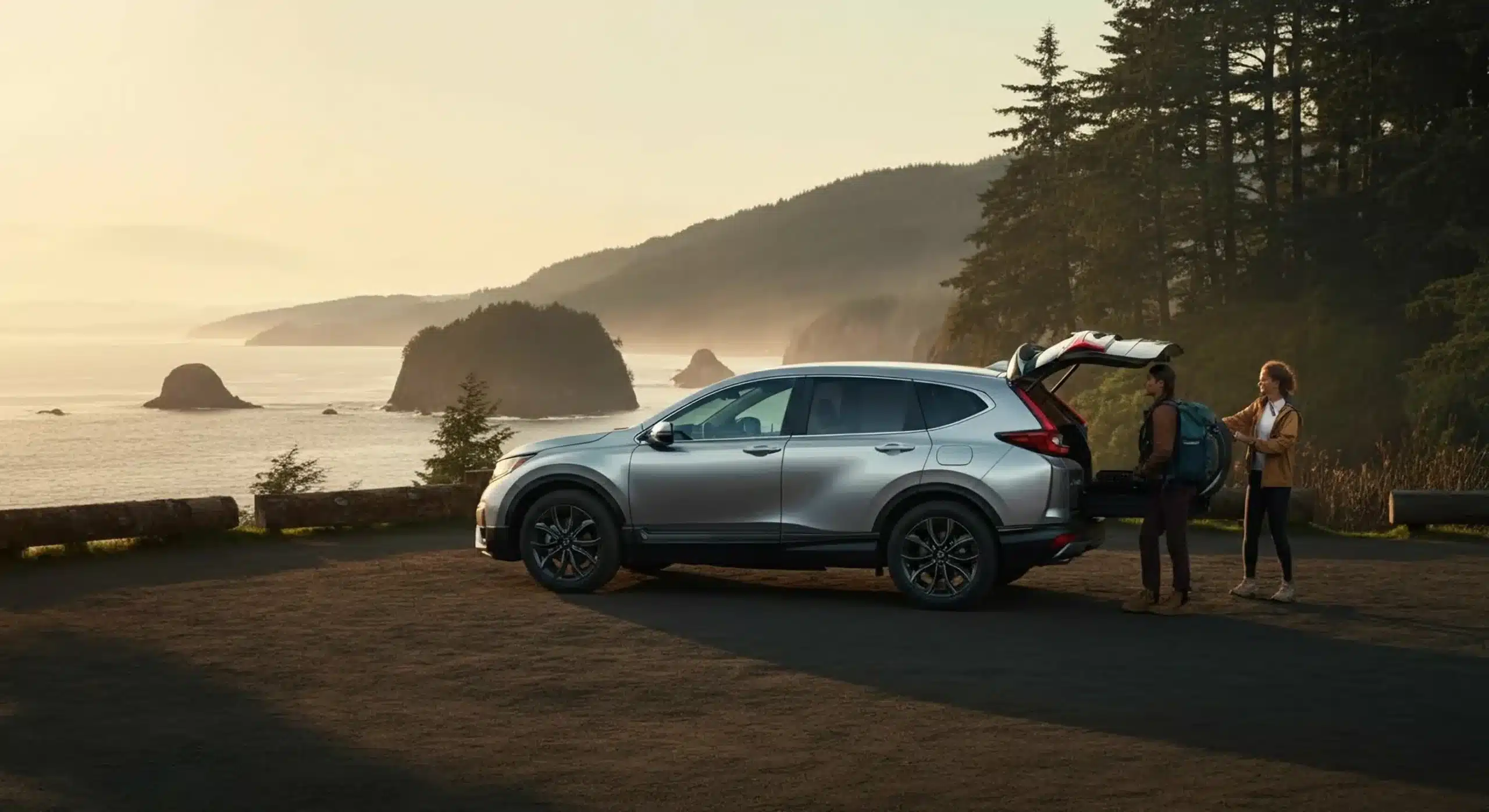
Honda Sensing Technology Features for Vancouver BC Drivers
May 19, 2026 | Honda News Every time you drive through downtown Vancouver during rush hour or head up the Sea-to-Sky Highway toward Whistler, dozens of small decisions keep you safe. Some happen so fast you barely notice them. That's exactly where Honda Sensing steps in. Honda Sensing is a suite of advanced driver-assistance technologies […]

May 19, 2026 | Honda News
Every time you drive through downtown Vancouver during rush hour or head up the Sea-to-Sky Highway toward Whistler, dozens of small decisions keep you safe. Some happen so fast you barely notice them. That's exactly where Honda Sensing steps in.
Honda Sensing is a suite of advanced driver-assistance technologies designed to help you detect hazards, avoid collisions, and stay centred in your lane. It uses cameras and radar sensors to monitor the road ahead, the vehicles around you, and even the lane markings beneath your tires. For the latest model year, every single Honda vehicle sold in Canada includes Honda Sensing as standard equipment.
This isn't an optional add-on or a feature reserved for top trims. Looking at a Civic? You get it. CR-V, HR-V, Accord, or Pilot? Same deal. That's a significant shift, and it means every Honda buyer in Vancouver gets the same core safety foundation regardless of which model they choose.
How Honda Sensing Works Behind the Scenes
Before we look at individual features, let's understand the basic technology. Honda Sensing relies on a front-facing camera mounted near the rearview mirror and a millimetre-wave radar sensor integrated into the front of the vehicle. These two systems work together constantly, scanning the road ahead and processing information in real time.
The camera reads lane markings, identifies vehicles, detects pedestrians, and recognizes traffic signs. The radar measures the distance and speed of objects ahead. Together, they feed data to onboard computers that can alert you to danger or even step in when a collision seems imminent.
This dual-sensor approach enables Honda Sensing to operate reliably across a wide range of driving conditions, including the heavy rain Vancouver drivers know so well.
Honda Sensing Features and What Each One Does
Collision Mitigation Braking System
The Collision Mitigation Braking System—CMBS for short—is arguably the most critical component. It monitors the road ahead for vehicles, pedestrians, and cyclists. If the system determines that a collision is likely, it first provides visual and audio warnings. You don't respond? It can apply the brakes automatically to reduce impact severity or help avoid the collision altogether.
In stop-and-go traffic along the Trans-Canada Highway through Burnaby and Coquitlam, CMBS serves as an extra layer of awareness when your attention drifts.
Adaptive Cruise Control
Adaptive Cruise Control—ACC—goes well beyond traditional cruise control. You set your desired speed, and the system automatically adjusts your following distance based on the vehicle ahead. Traffic slows? ACC slows your Honda. Traffic clears? It accelerates back to your set speed.
ACC transforms long highway drives into noticeably less fatiguing experiences, particularly on routes like the Coquihalla or Highway 99, where traffic patterns shift constantly.
Lane Keeping Assist System
The Lane Keeping Assist System, known as LKAS, uses the front camera to detect lane markings. If you begin drifting out of your lane without signalling, LKAS provides gentle steering input to guide you back toward the centre. It also shows visual warnings on the instrument panel.
This feature is especially useful during extended highway driving when fatigue can cause subtle lane drift. It doesn't replace attentive driving, but it adds a meaningful safety net.
Road Departure Mitigation
Road Departure Mitigation—RDM—works as a companion to LKAS but focuses on preventing you from leaving the road entirely. If the system detects your vehicle is about to cross a detected road edge or lane boundary without signalling, it provides steering assist and can apply braking force to help keep you on the road.
On winding BC mountain roads, where a momentary lapse in attention could have serious consequences, RDM provides genuine peace of mind.
Traffic Sign Recognition
Traffic Sign Recognition uses the front camera to read speed limit signs and display them on your instrument panel. This is particularly handy in areas where speed limits change frequently—like transitioning from Highway 1 into the slower urban sections of Vancouver's surface streets.
Honda Sensing on Vancouver and BC Roads
Vancouver drivers face a unique combination of conditions that test any safety system. Here's how Honda Sensing addresses them.
Heavy Rain and Wet Roads
The Lower Mainland receives significant rainfall throughout the year. Honda Sensing's camera-and-radar combination is engineered to operate in wet conditions, though extremely heavy downpours or road spray can occasionally affect camera visibility. The radar component helps compensate—millimetre-wave radar performs well in rain, where purely camera-based systems can struggle.
Highway and Mountain Driving
Routes like the Sea-to-Sky Highway, the Coquihalla, and Highway 1 through the Fraser Valley demand sustained attention. Adaptive Cruise Control reduces fatigue on long stretches, while Road Departure Mitigation provides an additional layer of safety on roads with steep drop-offs and sharp curves.
City Traffic in Metro Vancouver
Downtown Vancouver, Richmond, and Surrey all feature dense traffic with frequent stops and lane changes. CMBS is particularly valuable here—it monitors for pedestrians and cyclists in crosswalks and bike lanes. In urban environments where hazards can appear suddenly, the system's rapid detection capabilities offer a real advantage.
Winter Conditions
While Vancouver's city centre rarely sees heavy snow, areas like the North Shore mountains, the Coquihalla, and the BC Interior certainly do. Honda Sensing continues to function in cold weather, though heavy snow accumulation on the camera or radar sensor can temporarily affect performance. Keeping your windshield and front sensor area clear is important for optimal function during winter months.
What Makes Honda Sensing Stand Out in 2026
The automotive safety landscape is competitive right now. Most major manufacturers offer some form of driver-assistance suite. But the Honda approach stands apart in several ways.
First, standardization matters. Honda made the decision to include Honda Sensing on every new model, not just higher trims. That means the safety technology protecting you in a Civic is built on the same foundation as what you'd find in a Pilot. Many competitors still reserve their most advanced safety features for premium trim levels or optional packages.
Second, Honda Sensing uses a proven dual-sensor architecture. The combination of camera and radar provides redundancy that single-sensor systems lack. This matters in real-world conditions where rain, fog, or low-light situations might challenge one sensor type but not the other.
Third, the Honda system has been refined over multiple generations. The current Honda Sensing suite benefits from years of real-world driving data and continuous improvement, resulting in a system that feels natural and responsive rather than intrusive.
Honda Sensing Maintenance and Calibration
Honda Sensing is designed to be low-maintenance, but there are a few things BC drivers should keep in mind.
Keeping Sensors Clean
The front camera and radar sensor need a clear view of the road. Dirt, ice, or debris on your windshield or front grille can affect performance. Regular cleaning, especially during Vancouver's rainy season, keeps everything functioning properly.
When Calibration Is Needed
Windshield replacement? Front-end collision? The Honda Sensing camera may need professional recalibration. This ensures the system reads the road accurately. Honda-certified technicians in the Vancouver area are equipped to perform Honda Sensing calibration and diagnostics using specialized equipment.
Software Updates
Honda periodically releases software updates that can improve Honda Sensing performance. Your dealership service department can check for and apply these updates during routine maintenance visits.
Why Honda Sensing Matters for Your Next Vehicle
Driver-assistance technology has moved from luxury extra to essential safety feature, and Honda recognized this by making Honda Sensing standard across the board. Whether you're commuting through Vancouver, driving the kids to activities in the suburbs, or heading to the mountains for the weekend, Honda Sensing works quietly in the background to help keep you and your passengers safer.
It won't replace attentive, responsible driving. No system can. But it adds layers of protection for those moments when a split second makes the difference. The fact that it comes standard on every new Honda model means you don't have to compromise on safety to find a vehicle that fits your needs and the driving conditions in British Columbia.
Frequently Asked Questions About Honda Sensing
What is Honda Sensing, and what features does it include?
It is the integrated suite of Honda driver-assistance and safety technologies. It includes the Collision Mitigation Braking System, Adaptive Cruise Control, Lane Keeping Assist System, Road Departure Mitigation, and Traffic Sign Recognition. These features use a front-mounted camera and radar sensor to monitor road conditions and help drivers avoid or reduce the severity of collisions. The system operates across different speeds and driving scenarios—from highway cruising to low-speed urban traffic.
Is Honda Sensing standard on all 2026 Honda models sold in Canada?
Yes. For the latest model year, Honda includes this feature as standard equipment across its entire Canadian lineup. This applies to every trim level, so whether you choose an entry-level Civic or a fully loaded Pilot, you get the same core suite of safety features. This standardization reflects the Honda commitment to making advanced safety technology accessible to every buyer, not just those purchasing top-tier trims for the latest model year.
Does Honda Sensing work well in Vancouver’s rainy weather?
This feature is designed to function in different weather conditions, including rain. The system's dual-sensor approach—combining a camera with millimetre-wave radar—provides redundancy. Radar performs reliably in wet conditions where camera-only systems may struggle. However, extremely heavy rain or road spray that obscures the camera or sensor can temporarily affect certain features. Keeping your windshield and front grille area clean helps maintain consistent performance throughout the rainy season.
Can I turn Honda Sensing features off if I want to?
Yes, most features can be individually adjusted or turned off through the vehicle's settings menu. Some drivers prefer to customize sensitivity levels for Lane Keeping Assist or Adaptive Cruise Control based on their comfort level. However, most features will reset to their default active state each time you restart the vehicle.
What happens if my Honda Sensing system needs repair or recalibration?
This feature may require recalibration after events like windshield replacement or front-end collision repair. The system relies on precisely aimed cameras and sensors, so even minor shifts in alignment can affect accuracy. Calibration requires specialized Honda diagnostic equipment and should be performed by certified technicians. Routine maintenance visits are also a good time to check for available software updates that may improve system performance.
Disclaimer: Content contained in this post is for informational purposes only and may include features and options from US or international models. Please contact the dealership for more information or to confirm vehicle, feature availability.